

It's December! So to get in the festive spirit, I dive into two iconic Christmas ads. Each one shows how emotional storytelling can turn a simple campaign into something memorable, meaningful, and truly heart-warming!
Why emotion matters in advertising:
- Emotional resonance builds memory & shareability: When an ad evokes a feeling (joy, nostalgia, surprise, empathy), it becomes more memorable. Viewers might pause, reflect, or discuss it — helping the ad spread beyond its paid placement. Emotional content often drives sharing on social media and deeper engagement.
- Brand-connection rather than just product-pitch: Rather than focusing purely on product features, emotion allows brands to connect at a human level. This builds brand equity and loyalty: when people feel something, they associate that feeling with the brand, not just the product.
- Differentiation in a commoditised market: For many brands, the product offering is similar to competitors. Emotional storytelling becomes a way to stand out and make the brand experience unique and meaningful.
- Behavioural impact: Emotions can directly influence how people act. When an advert makes viewers feel something positive — such as happiness, belonging, or warmth — they’re more likely to respond favourably to the brand. For example, they might buy the product, recommend it to others, or simply think of the brand in a positive way next time they shop.
How Cadbury and John Lewis master emotional storytelling:
Case study 1: Cadbury's 'secret Santa' postal service
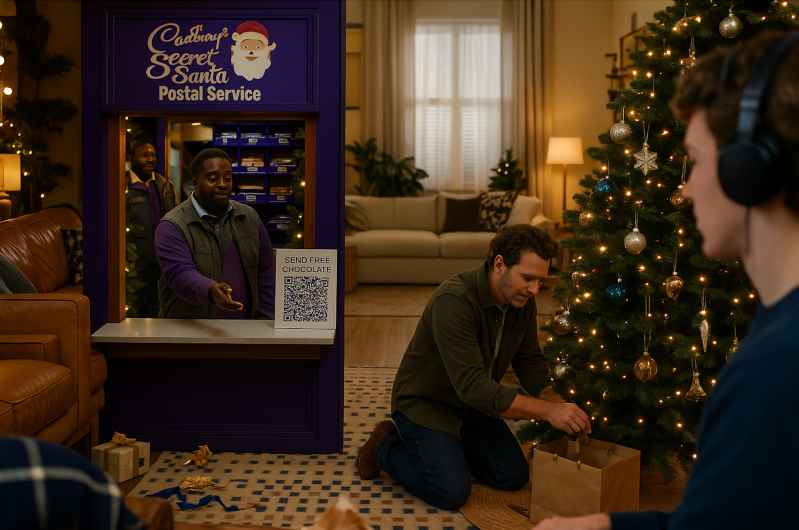
Cadbury’s Secret Santa campaign invited people to send a free Cadbury chocolate bar secretly to someone special by scanning a QR code on posters around the UK. Over 120,000 free bars were available!
Emotional levers:
- Surprise & delight: The notion of receiving a free chocolate unexpectedly creates a moment of joy.
- Generosity & connection: It taps the festive spirit of giving, making both sender and receiver feel good.
- Shared experience: The campaign became something people could talk about and share socially, increasing brand visibility.
Why it works:
- Cadbury used a simple human emotion — pleasure from a small gift — rather than complicated messaging.
- The activation (QR scan, free bar) gave a tactile, participatory element: not just to watch, but to do!
- The campaign built brand fluency and recall — one article noted the campaign achieved “Exceptional” scores in long-term business impact due to creative consistency and execution.
Marketing-thinking takeaway:
- Use emotion that aligns with the brand (Cadbury = treat, indulgence, small acts of kindness).
- Pair emotional messaging with a simple action (scan → send) to capture engagement.
- Make the audience the 'actor' (sender of the gift), not just a passive viewer.
Case study 2: John Lewis 2025 Christmas advert 'Where love lies'
The 2025 John Lewis Christmas campaign—titled “Where Love Lives”—focuses on a father–son bond and the power of gifting to say what words cannot.
The storyline:
- A teenage son gifts his father a vinyl record of the 90s house anthem 'Where Love Lives' by Alison Limerick.
- As the dad places the stylus on the record, the scene flashes back to his youth: a lively club filled with lights, music, and energy. The visuals then move through time, showing his son from a toddler to a newborn, showing meaningful moments of him raising his son.
- The ad returns to the present day, where the father and son share a quiet, emotional hug as the words “If you can’t find the words, find the gift” appear on screen — perfectly capturing the campaign’s heartfelt message.
Emotional levers:
- Nostalgia & memory: The vinyl record is a symbolic 'time-machine', invoking the dad’s youth and linking it to his present role of a father.
- Connection & gifting: Rather than the gift being a gadget, it’s a meaningful present that connects two people’s experiences across time.
- Wordless emotion: The tagline“If you can’t find the words, find the gift” highlights the idea that a thoughtful gift can express what spoken language may not.
Why it works:
- The campaign aligns with John Lewis’s brand heritage of emotional, story-driven festive advertising, yet refreshes the formula by focusing on a father–son dynamic rather than younger children or whimsical characters.
- Multi-channel integration: TV, digital, outdoors, in-store experiences and even a limited-edition vinyl release tie into the ad’s message and extend the emotional engagement.
-
Authenticity: Using a vinyl format — something physically tangible in an era of streaming — emphasises the real-world value of gifting and shared experiences. Adding to this authenticity, all profits from the £14.99 limited-edition vinyl record go towards the John Lewis Partnership’s Building Happier Futures programme, which helps people build brighter futures.
Considerations & critiques:
- Some commentary points out that the concept may feel somewhat nostalgic to a particular generation (Gen X/older millennials) and may not resonate as strongly with younger audiences unfamiliar with vinyl culture.
- The ad launches earlier than in past years—reflecting retail pressure to begin the festive season sooner, which may change how the emotional peak is achieved.
Marketing-thinking takeaways:
- Choose a gift (or gesture) as the hero of the story, not just the brand or product.
- Use music or another sensory element to evoke emotion and memory.
- Tell a relatable human story (here: father/son) rather than relying solely on spectacle.
- Ensure the emotional tone aligns with the brand’s identity (e.g., John Lewis = thoughtful, premium, caring).
- Expand the campaign beyond the advert alone—physical touchpoints, merchandise, and social sharing matter.
💭Final thoughts:
Both Cadbury and John Lewis demonstrate that emotional storytelling isn’t just a creative choice — it’s a strategic one. Whether it’s a small act of kindness or a deeply personal gift, these campaigns show that tapping into real human feelings creates stronger brand affinity, deeper engagement, and long-term impact. As consumers become more selective and digital spaces become more crowded, emotion remains one of the most effective tools marketers can use to connect meaningfully with their audiences. The best adverts don’t just promote a product; they tell a story that stays with us long after the screen fades to black.
What are your thoughts? Drop a comment in the box below!
Add comment
Comments