

When we think about carbon footprints, we often picture cars, planes, or factories — but our digital lives also play a surprisingly large role. Social media platforms, streaming, and everyday online activity all contribute to carbon emissions, even though they feel intangible.
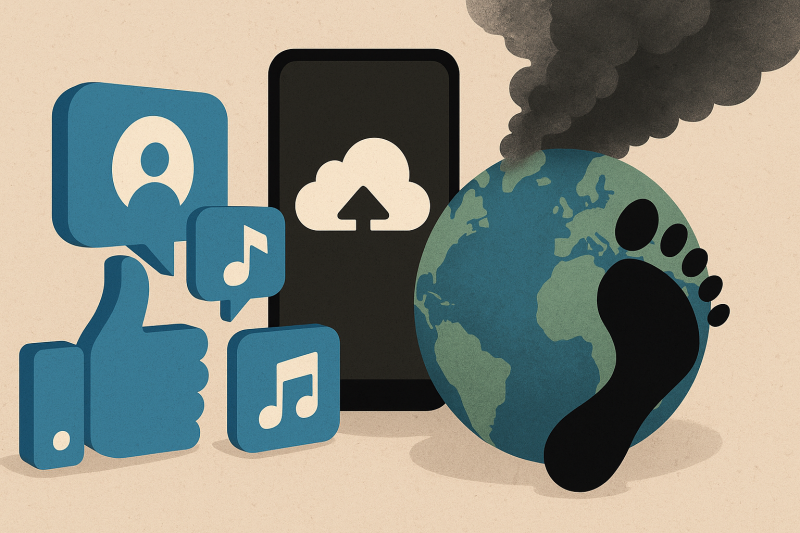
How does social media use energy?
- Every photo we upload, TikTok we scroll past, or message we send is stored, processed, and delivered through huge data centres around the world. These facilities run 24/7 and require vast amounts of electricity to power servers and cooling systems. While many tech companies are transitioning to renewable energy, a significant proportion of global electricity still comes from fossil fuels, meaning our digital activity indirectly produces carbon emissions.
- Something as simple as backing up your photos, sending large attachments, or storing old files in the cloud has a footprint. Each file is kept alive on a server somewhere, continuously using energy.
- Even emails add up — especially those with images, attachments or newsletters you never open.
Video content: the biggest contributor
- Short-form video has transformed the way we use social platforms, but it’s also one of the most energy-intensive types of content. Watching high-resolution videos on TikTok, Instagram Reels or YouTube uses far more data than viewing images or reading text.
- Auto-play, HD streaming, and infinite scrolling mean we consume more data than we realise. Even one minute of high-quality video can involve thousands of miles of data transfers through servers, cables, and networks.
- The rise of AI also adds to this footprint. Behind your personalised 'For You' page or Instagram Explore feed are complex algorithms and AI systems. These models require powerful computing and ongoing energy use to deliver tailored content in real time. As AI becomes more advanced, its energy demand continues to grow.
The positive side: how social media supports climate action
Despite its footprint, digital platforms can also support climate action. Social media spreads awareness, mobilises communities, and encourages sustainable behaviours at scale. It reduces the need for printed marketing materials, enables remote communication, and can replace carbon-heavy travel through virtual events.
How can we reduce our digital carbon footprint?
Small digital choices can make a meaningful difference:
- Turn off auto-play
- Watch videos in standard definition when HD isn’t needed
- Regularly delete unused files, photos, and emails
- Reduce unnecessary cloud backups
- Download content instead of constantly streaming
- Use Wi-Fi instead of mobile data when possible
These habits help reduce energy use across the wider digital ecosystem.
💭Final thoughts: a more conscious digital future
Our online world may be virtual, but its impact on the planet is very real. By understanding the carbon footprint of social media and digital habits, we can make more mindful choices — and push for technologies that are cleaner, more efficient, and better for the planet.
What are you’re thoughts on digital carbon footprint? Leave a comment in the section below!
Add comment
Comments